The best travel camera depends on what you will actually carry. Start with your phone if it already makes the photos you want. These three choices add different things: a small interchangeable-lens kit, a long built-in zoom, or a compact camera with a larger sensor than the long-zoom option.
Choose the camera around the trip: carrying weight, focal range and weather exposure can matter more than a headline specification.
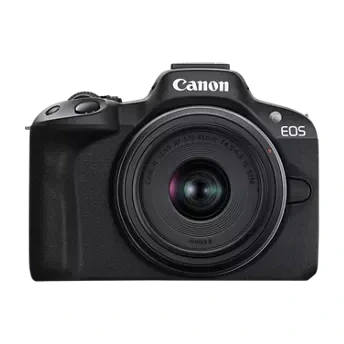
#1. Canon EOS R50 18-45mm kit: room to choose lenses later
- APS-C sensor
- Canon RF lens mount
Keep in mind: The kit zoom has a modest range, and adding lenses increases both cost and packed size.
The R50 gives you a viewfinder and a screen that turns out from the body. Canon's current US page documents the APS-C sensor and RF mount. The selected offer is a white body with the RF-S 18-45mm kit zoom. It is a complete starting camera route, rather than a body-only offer.
Use that short zoom for general views and people at ordinary distances. A small kit is easier to plan around than a bag of lenses bought without a task. If distant wildlife is the reason for the purchase, include a suitable longer lens in the decision from the start.
Read the charging instructions before packing one USB-C cable for everything. Canon lists specific supported power equipment. The presence of a USB-C socket is not itself a charger compatibility promise. The body and lens also need sensible protection from weather; do not infer a waterproof kit from a travel label.
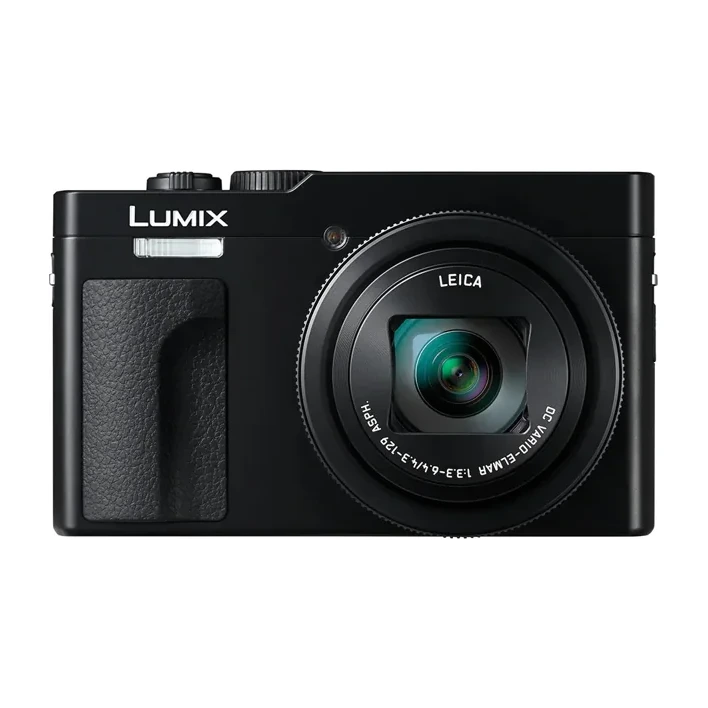
#2. Panasonic LUMIX ZS99: reach without changing a lens
Panasonic LUMIX ZS99 Panasonic LUMIX ZS99
Our verdict:
Long zoom in one unit
Best for daylight travel subjects where a fixed wide-to-long zoom is more useful than building a lens system.
View at Panasonic - Built-in 24–720mm equivalent zoom
- 1/2.3-inch sensor
Keep in mind: The small sensor and lack of a viewfinder are firm trade-offs; this is not a low-light upgrade promise.
The ZS99 has a built-in zoom covering a 24-720mm equivalent range. Panasonic's US specifications make the long reach clear. You do not need to carry separate lenses to obtain that stated framing range.
The camera uses a small 1/2.3-inch sensor and a rear screen for framing. That combination deserves more attention than its zoom number. If you want to use a viewfinder in bright sun, this is the wrong branch. If your main subject is an indoor meal or a dim room, do not assume long zoom solves the task.
Panasonic documents USB-C charging. Match the US ZS99 model to the actual offer, including its local warranty. The similarly named TZ99 is sold in other markets. A shared camera family does not establish the same regional sale or service terms.
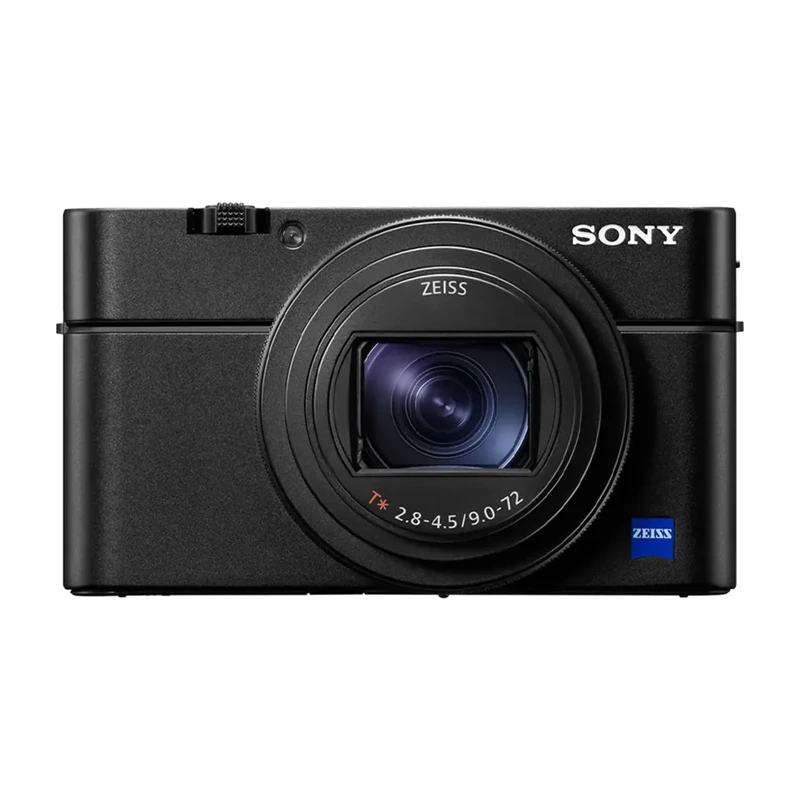
#3. Sony RX100 VII: a compact with a viewfinder
Sony RX100 VII camera Sony RX100 VII camera
Our verdict:
Compact with viewfinder
Best for a traveler who wants a fixed zoom and a pop-up electronic viewfinder in a small camera.
View at Sony - One-inch-type sensor
- Fixed 24–200mm equivalent zoom
Keep in mind: Its fixed zoom cannot take another lens; accessories and the warranty territory need separate checks.
The RX100 VII combines a one-inch-type sensor with a fixed 24-200mm equivalent zoom. Sony's US product page confirms the camera remains in its catalogue. The viewfinder is a useful reason to choose this branch over a screen-only compact.
It has less long-end reach than the Panasonic. Decide which framing range fits your subjects. Do not rank the cameras by zoom multiple alone. A shorter zoom can suit a trip with people and street scenes, while a distant subject calls for another decision.
The selected maker link is the RX100 VII camera, without the former retailer accessory bundle. Read the warranty territory and choose any memory card and bag separately. A card must meet the recording-speed class for the chosen setting, and a bag must fit the camera.
Factors to consider when choosing the best travel camera
Define a photo the phone cannot already make
Write down the actual gap before buying. You may need a long optical zoom for a subject you cannot approach. You may want a viewfinder or a choice of lenses. Those are clearer reasons than a vague plan to take “more serious” photos.
If your phone already handles the intended shots, keeping it avoids another battery and file workflow. Spend time learning its camera settings first. A separate camera adds value only if its function and the extra effort both fit the trip.
Count the whole kit
The camera's body mass is not the packed mass of a working kit. Add any lens, spare battery and charger. Include a strap and protection. For an interchangeable-lens model, compare the lens you intend to take, not the smallest body-only number in a specification.
These choices use two different approaches. The Canon lets you change the kit later. The Panasonic and Sony keep their lenses attached. A fixed-lens camera simplifies that part of the packing decision but cannot become a different lens system after purchase.
Check charging and storage, plus weather limits
Find the exact battery and charging method in the manual. Decide where charging can happen on the itinerary. A compatible travel power bank can help only when the camera accepts its output and the cable is suitable.
Buy a memory card that meets the selected camera's recording requirement. Plan a backup route before filling the card. A phone-transfer feature does not prove you can copy every large file without a connection or an app. Follow the maker's actual file-transfer instructions.
Choose accessories after the camera
Measure the assembled camera and any spare lens before choosing a bag. Decide whether you need quick access or a padded insert in an existing daypack. A bag's volume is not a promise that your exact camera fits. The camera-bag guide covers those checks.
Add a tripod only for a defined shooting task and a venue where it is allowed. Its head and plate must suit the kit. Do not pack a tripod purely because a bundle includes one. A small selection of usable accessories is preferable to unverified extras.
How we picked
The shortlist compares fixed-lens reach, framing controls and the flexibility of a lens kit. Read the trade-off beside each choice, then count the charger, lens and accessories in the kit you will actually carry.
More in this guide